
eastern philosophy
Advaita and Vedanta, yoga philosophy, Zen, Taoism, Tibetan teachings and Tantra, alongside practical guides to meditation and chi. Some are classic translations; others are well-thumbed handbooks from the teachers who brought these ideas west.
Featured eastern philosophy & practice books

Translated and edited with an introduction by James Mallinson and Mark Singleton
'Yoga is to be known through yoga. Yoga arises from yoga. One who is vigilant by means of yoga delights in yoga for a long time.’
Yoga is hugely popular around the world today, yet until now little has been known of its roots. This book collects, for the first time, core teachings of yoga in their original form, translated and edited by two of the world's foremost scholars of the subject. It includes a wide range of texts from different schools of yoga, languages and eras: among others, key passages from the early Upanisads and the Mahabharata, and from the Tantric, Buddhist and Jaina traditions, with many pieces in scholarly translation for the first time.
Covering yoga's varying definitions across systems, its most important practices, such as posture, breath control, sensory withdrawal and meditation, as well as models of the esoteric and physical bodies,
Roots of Yoga is a unique and essential source of knowledge.
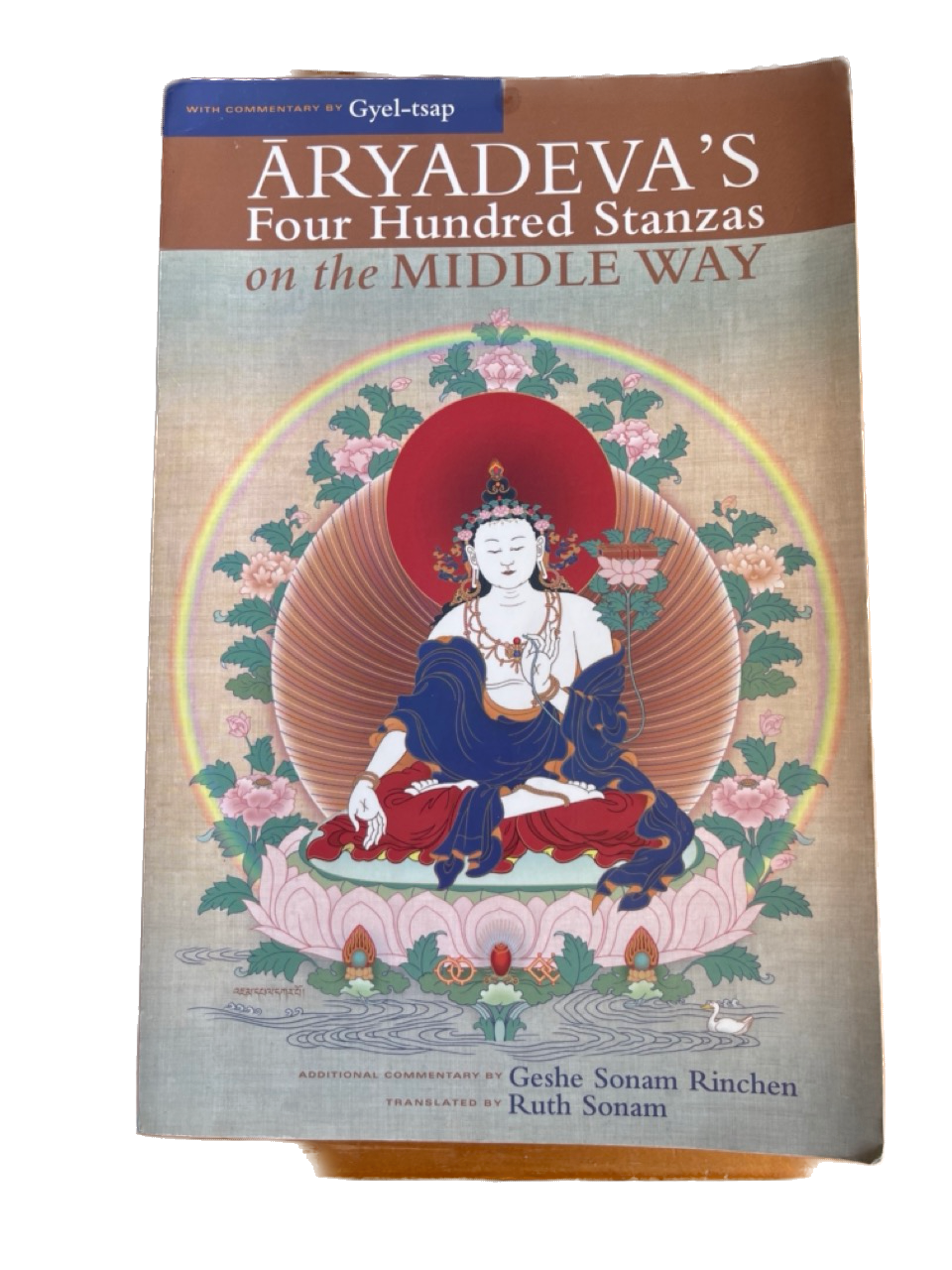
With commentary by Gyel-tsap
Additional commentary by Geshe Sonam Rinchen
Translation by Ruth Sonam
Gyel-tsap Dar-ma-rin-chen states that Aryadeva's Four Hundred Stanzas was written to explain how, according to Nagarjuna, the practice of the stages of yogic deeds enables those with Mahayana motivation to attain Buddhahood. Both Nagarjuna and Aryadeva urge those who want to understand reality to induce direct experience of ultimate truth through philosophic inquiry and reasoning. Aryadeva's text is more than a commentary on Nagarjuna's Treatise on the Middle Way because it also explains the extensive paths associated with conventional truths. The Four Hundred Stanzas is one of the fundamental works of Mahayana Buddhist philosophy, and Gyel-tsap's commentary is arguably the most complete and important of the Tibetan commentaries on it.
Mahayana practitioners must eliminate not only obstructions to liberation but also obstructions to the perfect knowledge of all phenomena. This requires a powerful understanding of selflessness, coupled with a vast accumulation of merit, or positive energy, resulting from the kind of love, compassion, and altruistic intention cultivated by bodhisattvas. The first half of the text focuses on the development of merit by showing how to correct distorted ideas about conventional reality and how to overcome disturbing emotions. The second half explains the nature of ultimate reality that all phenomena are empty of intrinsic existence. Gyel-tsap's commentary on Aryadeva's text takes the form of a lively dialogue that uses the words of Aryadeva to answer hypothetical and actual assertions questions and objections. Geshe Sonam Rinchen has provided additional commentary to the sections on conventional reality, elucidating their relevance for contemporary life.

The Book of the Secrets, Volume 3 – Bhagwan Shree Rajneesh (Osho) on the Vigyan Bhairav Tantra. 1976 first edition from the Poona ashram years.
About the book
In this series of discourses Rajneesh comments on the 112 meditation techniques of the Vigyan Bhairav Tantra, the ancient dialogue between Shiva and Devi. Volume 3 continues his exploration of the methods, interspersed with answers to disciples' questions.
Early Rajneesh Foundation first editions, published before the name 'Osho' was adopted, are increasingly collected.
The Vigyan Bhairav Tantra is a short Kashmiri Shaivite text in which Devi asks Shiva about the nature of reality, and Shiva answers not with philosophy but with 112 methods of meditation – techniques working with breath, sound, the senses, emotion, imagination and everyday activity. Rajneesh regarded it as one of the most important texts in the world, and his discourses on it, collected across five volumes, are among his most celebrated works.
In these talks, given in the early-to-mid 1970s, he explains each technique in turn, draws on stories from Zen, Sufism, Hasidism and his own experience, and answers questions from Western and Indian seekers. The discourses were later reissued under Osho's name, but these early Rajneesh Foundation printings are the original editions.
About the author
Bhagwan Shree Rajneesh (1931–1990), later known as Osho, was an Indian mystic and former philosophy professor whose ashram in Poona drew many thousands of Western seekers in the 1970s. His hundreds of published discourses on meditation, religion and consciousness remain widely read.
Ideal for: meditators, students of Tantra and Kashmir Shaivism, and collectors of early Rajneesh/Osho first editions.
Details
- Author: Bhagwan Shree Rajneesh (Osho)
- Publisher: Rajneesh Foundation, Poona
- Published: 1976
- Edition: First edition
- Volume: 3
Carefully packed and shipped from Australia. Questions about this copy, or want more photos? Get in touch.
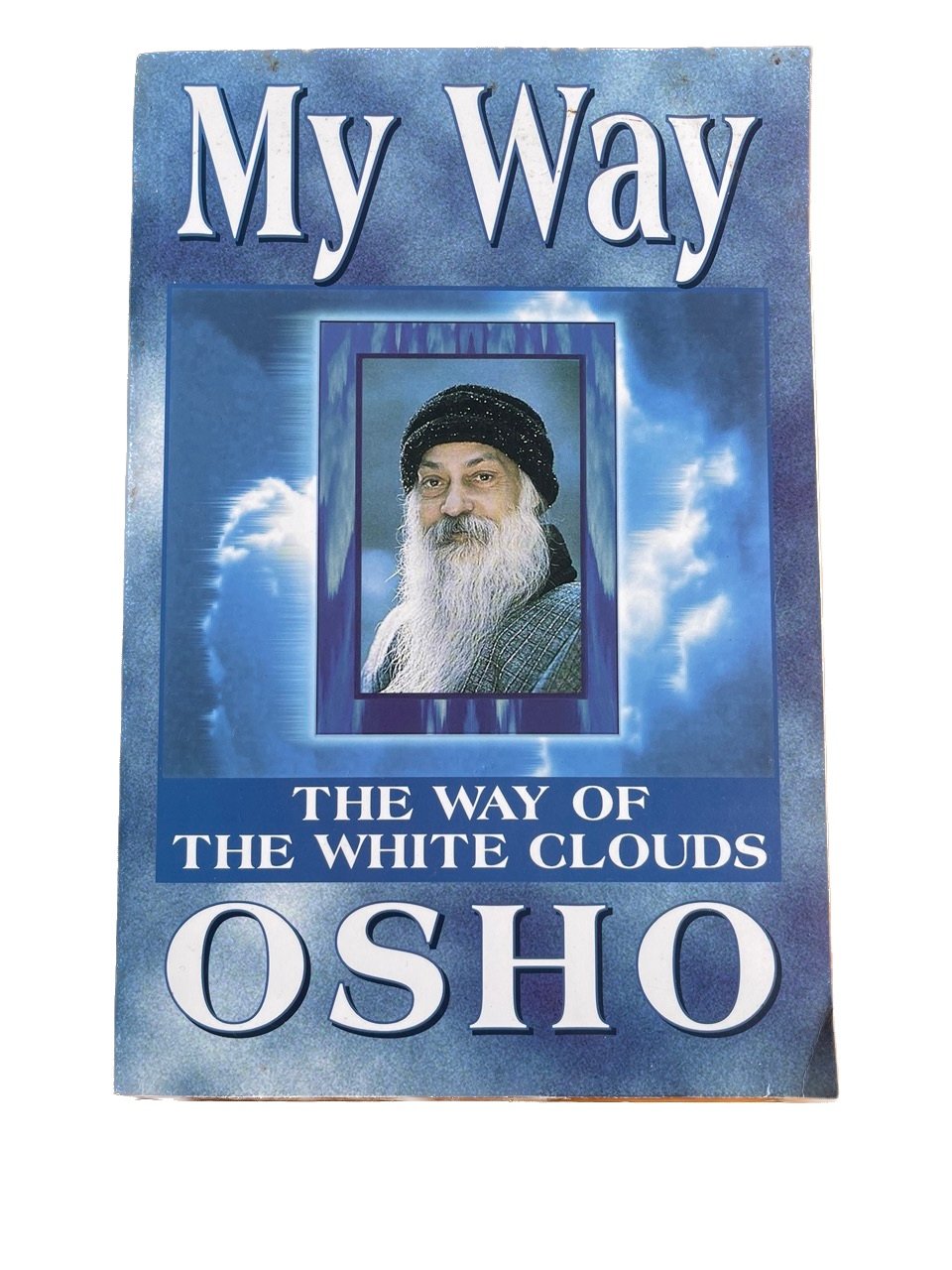
The Way of the White Clouds
Osho
The goal is every moment. The journey is the goal.
Become white clouds - just being there, no resistance, no fight; just enjoying the very existence, celebrating the moment, the joy, the ecstasy of it.' Osho's inspiring and life-changing book offers you a vision of profound personal transformation. Believed by many to be the greatest spiritual teacher of our century, he has drawn thousands of men and women the world over to his ashram in their search for spiritual fulfilment.
Now you, too, can benefit from his compassion and wisdom in your own search for inner happiness. Choosing the symbol of the white clouds to represent the seeker after knowledge, he addresses all the states - storms, winds, sun and rain - you will inevitably have to face on your spiritual journey.
Osho is the perfect Master - with boundless patience and love he offers you a guiding light on the path to inner joy, through the dilemmas of modern life.
Osho
Many people today are stressed and anxious, feeling unfulfilled by their work and relationships.
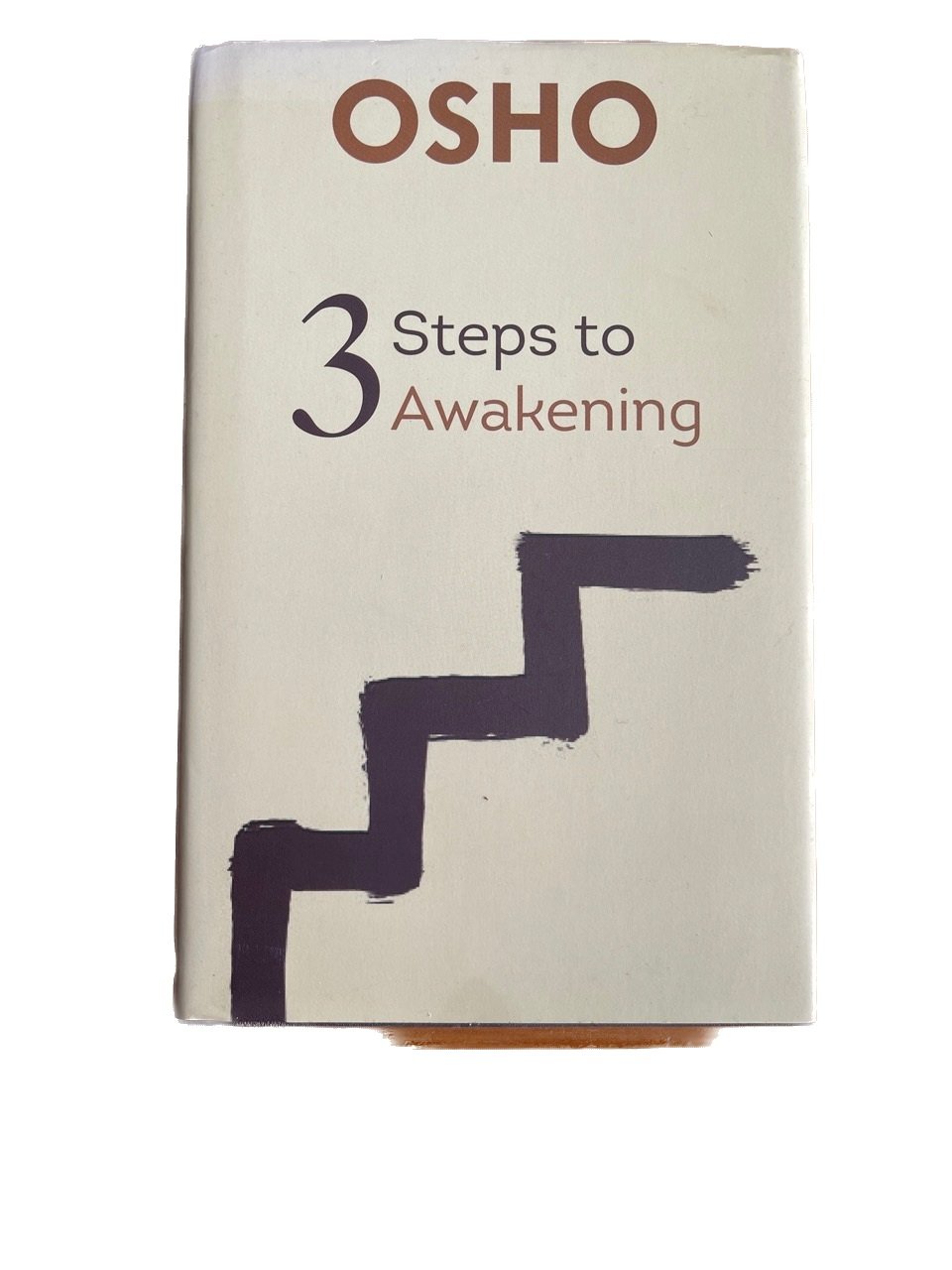
In Three Steps to Awakening, Osho describes with immense clarity how to bring a transforming meaningfulness into day-to-day life. With three simple steps, he shows the way to awaken and expand consciousness to the full, and live a life of gratefulness and bliss.
"There are only three steps: freedom of consciousness, simplicity of mind, and emptiness of mind. One who sharpens his freedom, simplicity, and emptiness, will attain enlightenment."

Bhagwan Shree Rajneesh
A sanyasin asked the following question:
Ramakrishna used food as an anchorage to remain on the periphery. What is your anchorage?
Bhagwan Shree Rajneesh replied:
Four men of the cloth were having a confidential talk and discussing their vices.
'I like pork,' said the rabbi.
'I drink a bottle of bourbon a day,' said the Protestant minister.
'I have a girlfriend on the side,' said the priest.
They all turned to the Baptist minister who shrugged: 'Me? I like to gossip.'
That's my answer also - I like to gossip.
That's my weight. All these talks are nothing but gossips. If it hurts your ego, call them cosmic gossips, divine gossips - but they are gossips.
THE GRASS GROWS BY ITSELF is a beautiful gossip - eight chats about Zen Masters, and their ways of non-doing.
THE SECRET OF THE GOLDEN FLOWER
A CHINESE BOOK OF LIFE
Translated and explained by
RICHARD WILHELM
Commentary by
C.G. JUNG
With Eleven Plates and Four Text Illustrations
1975 hardcover