
 Image 1 of 3
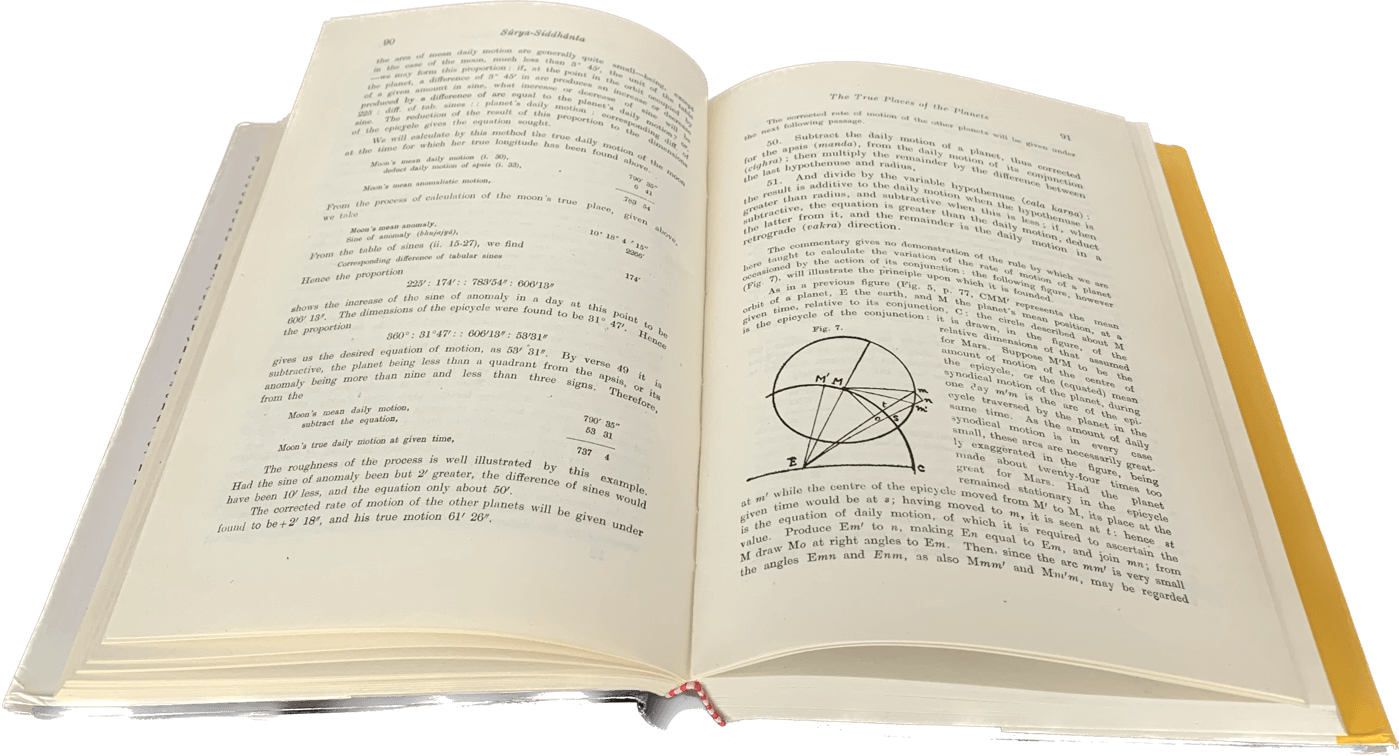 Image 2 of 3
 Image 3 of 3
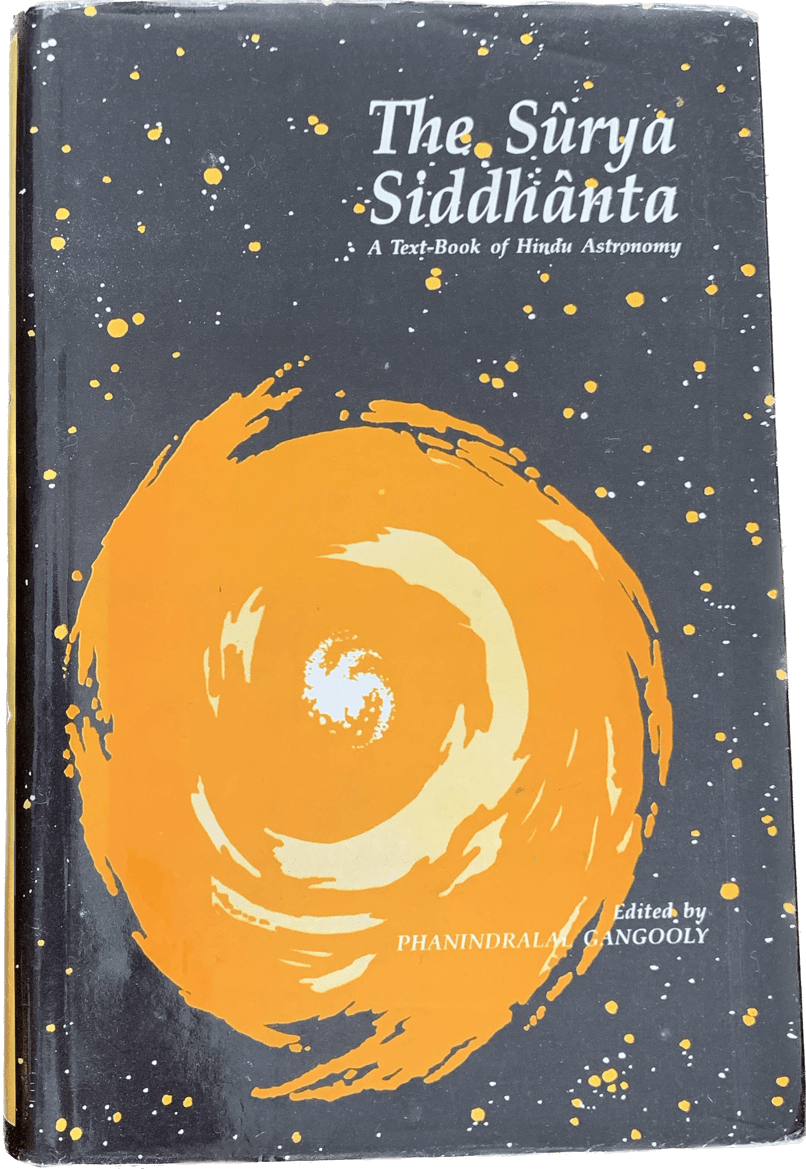
Surya Siddhanta: A Text-Book of Hindu Astronomy, in Ebenezer Burgess's translation, edited by Phanindralal Gangooly – the classic Sanskrit treatise on astronomy.
The Surya Siddhanta is the most important surviving text of classical Indian astronomy, covering planetary motion, eclipses, time-keeping, cosmography and astronomical instruments. Burgess's 19th-century translation with extensive notes, edited by Phanindralal Gangooly, remains the standard English edition for historians of science, jyotish practitioners and students of Indian mathematics.
The text was composed in Sanskrit verse, probably in its present form by around the 5th–6th centuries AD, and was used by astronomers and calendar-makers across India for over a thousand years. It gives methods for calculating the mean and true positions of the planets, the timing of eclipses and the rising of stars, and describes the structure of the cosmos and the instruments used for observation.
Burgess's notes compare the Indian methods with Greek and modern astronomy, and remain valuable for anyone studying the history of astronomy or the mathematical basis of Vedic astrology.
Ebenezer Burgess was an American missionary and scholar who published his translation in 1860. Phanindralal Gangooly edited the later reissue with a detailed introduction.
Ideal for: historians of science and mathematics, jyotish (Vedic astrology) students, and collectors of Indological texts.
Carefully packed and shipped from Australia. Questions about this copy, or want more photos? Get in touch.